
HR’s 2026 Mandate: A Response to Gartner’s Top Priorities for CHROs
In this insightful commentary, Michelle responds to the latest Gartner research on top priorities for Chief Human Resources Officers.
Michelle Strasburger, CEO, HR Rebooted
2/24/20263 min read
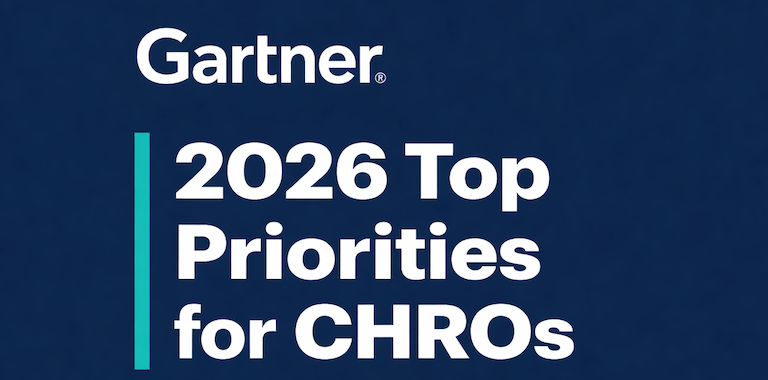
Every year, I pay close attention to what the analysts are saying about our profession. The latest “2026 Top Priorities for CHROs” infographic from Gartner highlights four focus areas for HR leaders:
Harness AI to revolutionize HR
Shape work in the human-machine era
Mobilize leaders for growth in an uncertain world
Address culture atrophy to power performance
There is a lot here that resonates deeply. And there are a few areas where I believe we need to go further.
Let’s walk through it together.
1. Harness AI to Revolutionize HR
Gartner emphasizes evolving the HR operating model as the highest-impact lever for AI productivity gains (29%), encouraging digital HR delivery, AI agents handling Tier 0 and Tier 1 activities, and HRBPs shifting into strategic talent leaders.
I agree with the spirit of this. Transactional work should be automated wherever possible. HR should absolutely elevate.
But here’s what’s missing: governance.
Revolutionizing HR with AI is not just about redesigning the operating model. It is about defining guardrails before scaling automation. If AI agents are performing onboarding tasks, identifying upskilling needs, or influencing talent decisions, then:
Who is validating outputs?
What bias controls are in place?
What data is being used?
What policies define acceptable use?
An AI-first design without governance is simply faster risk.
Before we build innovation command centers, we need governance frameworks embedded into them.
2. Shape Work in the Human-Machine Era
Gartner’s four human-AI scenarios are thought-provoking. They ask leaders to consider whether:
Work stays the same but uses AI
Work transforms entirely
Humans want to work with AI
Humans want AI to do the work
This is exactly the right conversation.
However, this isn’t just a design exercise. It’s a workforce planning revolution.
When Gartner suggests managing dual KPIs for “now” and “next” I believe HR must also manage dual responsibilities:
Protect today’s workforce
Prepare tomorrow’s workforce
That means reskilling programs cannot be optional. It means transparency in role redesign. It means resisting the temptation to eliminate roles prematurely under the assumption that AI can absorb the work.
Organizational design in the AI era cannot be reactive. It must be intentional and iterative.
3. Mobilize Leaders for Growth in an Uncertain World
One of the strongest sections of the infographic is the call for leaders to routinize change, not just inspire it. Gartner notes that when change becomes instinctive, adoption is 3x more likely to be healthy.
That insight is powerful.
But here’s the challenge: leaders cannot routinize what they do not understand.
If executives are experimenting quietly with AI while employees are unsure of expectations, we create fragmentation. Change becomes uneven. Trust erodes.
This is where HR must step in as educator and translator.
We must:
Clarify expectations
Normalize experimentation
Provide structured learning paths
Equip leaders to regulate both excitement and fear
AI adoption is not purely a systems issue. It is an emotional journey.
4. Address Culture Atrophy to Power Performance
Gartner highlights that embedding culture into daily processes can increase employee performance by up to 34
Yes.
But culture and AI are now inseparable.
If AI is introduced without transparency, culture weakens.
If AI decisions feel opaque, trust erodes.
If AI amplifies bias, performance declines.
Embedding culture today means embedding AI values into:
Talent acquisition
Performance management
Learning systems
Workforce analytics
Policy design
Culture is no longer just behavioral. It is digital.
Where I Would Push the Conversation Further
Gartner is right to position AI as central to the CHRO agenda. Where I would challenge us as a profession is this:
AI is not just another priority.
It is the infrastructure beneath every other priority.
AI influences:
How we design work
How we define culture
How leaders manage change
How talent is assessed and developed
And yet, governance is implied, not explicit.
If we truly want to revolutionize HR, shape work, mobilize leaders, and strengthen culture, governance must sit at the core of the operating model, not alongside it.
Not as compliance.
Not as risk mitigation.
But as enablement.
Governance creates clarity.
Clarity creates confidence.
Confidence drives adoption.
My Take for 2026
The CHRO of 2026 is not simply digitizing HR.
The CHRO of 2026 is:
Designing a blended human-AI workforce
Establishing ethical guardrails
Upskilling leaders continuously
Protecting trust while accelerating innovation
Treating governance as a growth lever
AI will absolutely reshape HR.
But HR will shape how AI reshapes the organization.
That is the opportunity in front of us.
And if we approach it with intention, structure, and education, we won’t just respond to the future of work.
We’ll lead it.
(Source: Gartner, 2026 Top Priorities for CHROs) Download the infographic.
HR Rebooted
Empowering organizations for the AI Revolution
Join our Email List
info@hrrebooted.com
583 Reed Rd | Colebrook, NH 03576 | 603.490.3703
© 2026. All rights reserved.